Short answer: EVA is a thermoplastic copolymer that can behave like rubber. Un-crosslinked EVA runs on plastic logic (it melts, you process it, it cools). Crosslinking or foaming pushes the feel toward “rubber-like” bounce and grip. That’s why the same three letters show up in midsoles, marine decks, orthotics, car mats, and cosplay props—and folks still argue about the label.
EVA (Ethylene-Vinyl Acetate) Copolymer: definition & key properties
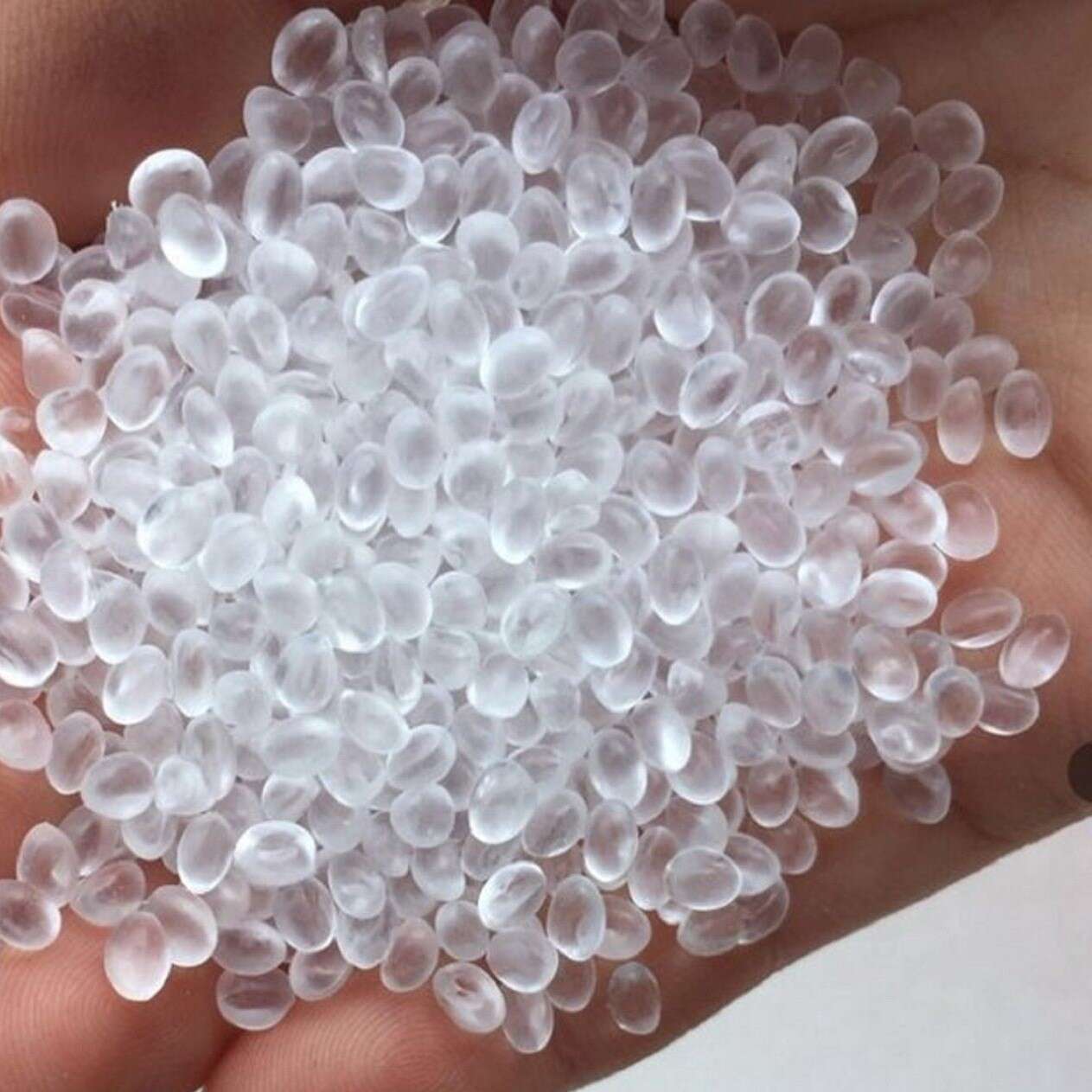
EVA is a copolymer of ethylene and vinyl acetate (VA). Tweak the VA content and you tune softness, rebound, and crack resistance. In plain speak: more VA → softer, grippier, more “rubbery” hand feel. Because EVA is closed-cell, it resists water uptake, keeps weight down, and cuts clean with die, CNC, or waterjet—ideal for production lines.
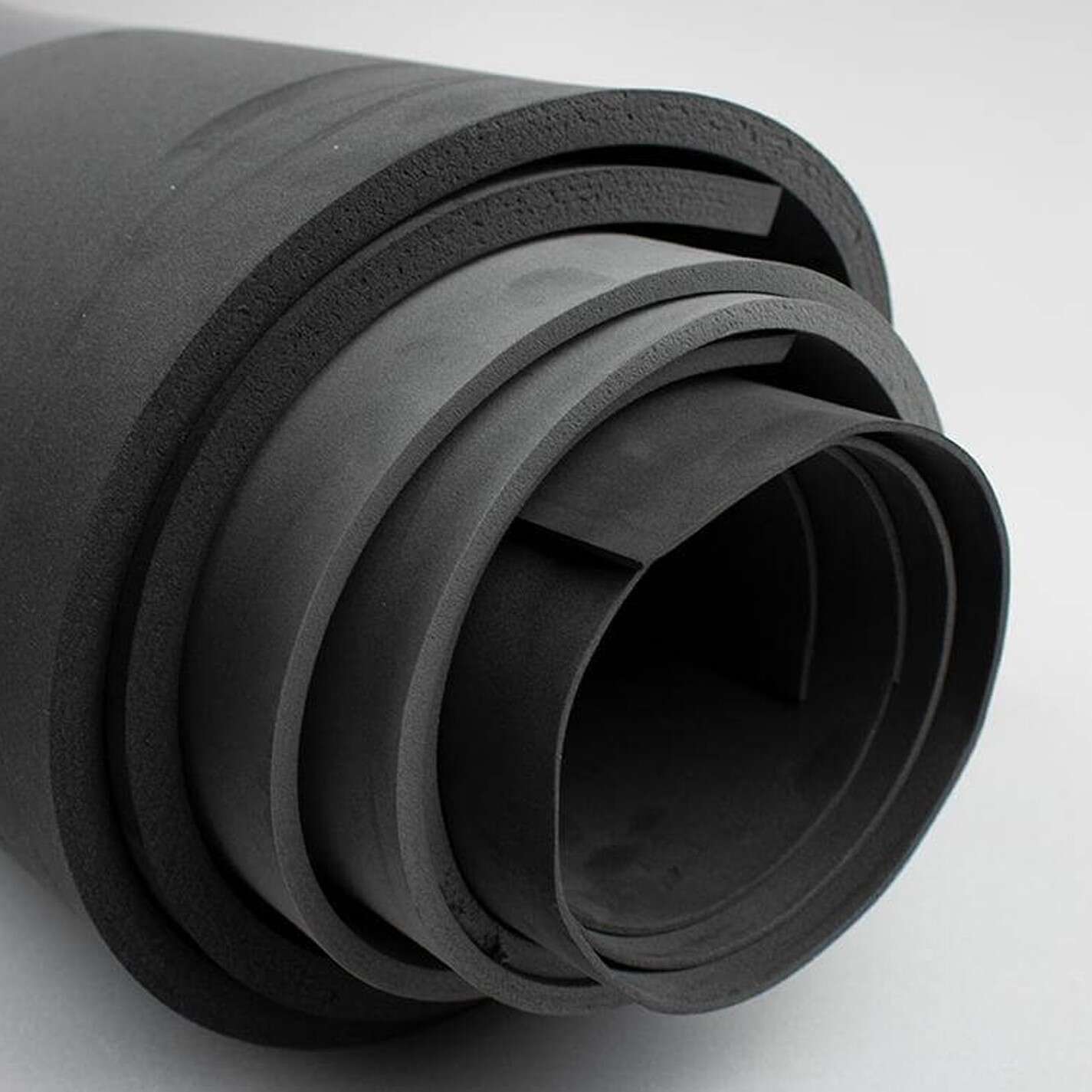
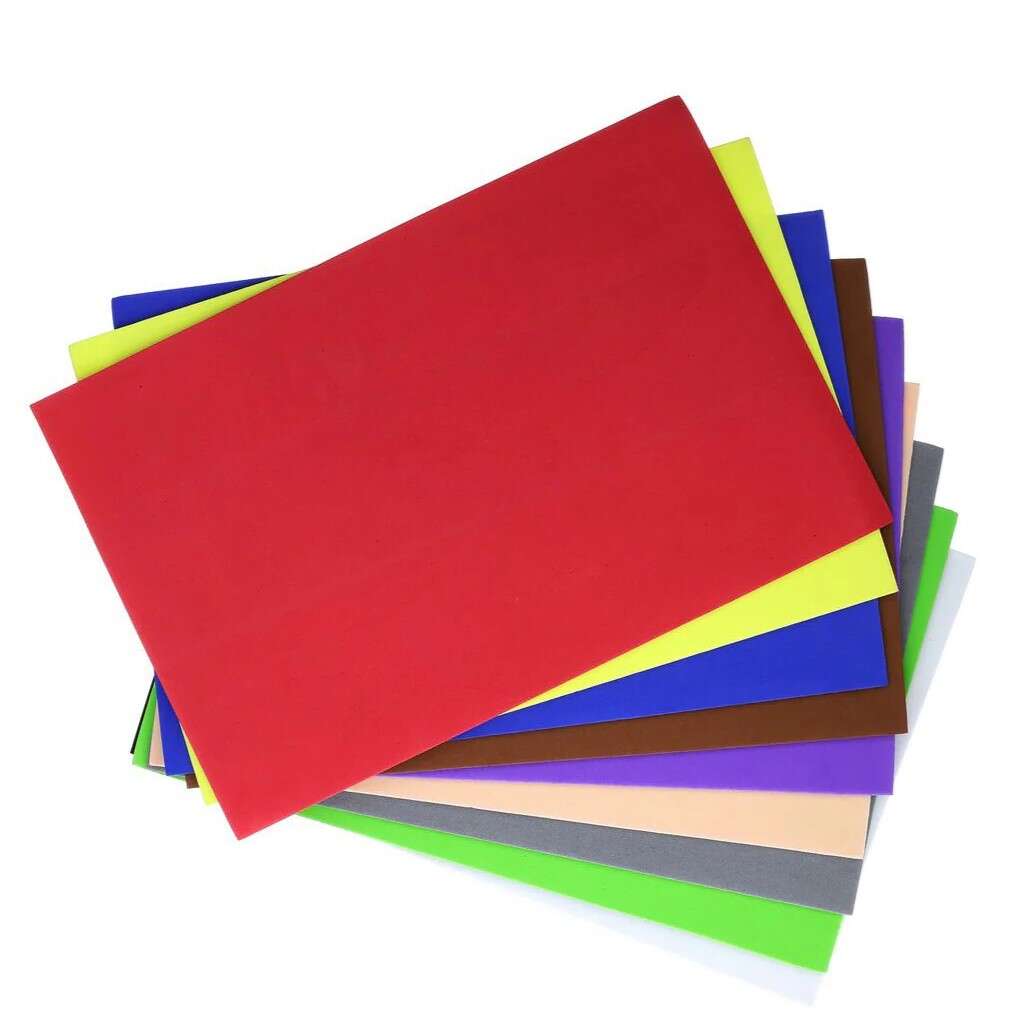
If you need stock forms, start here: EVA Foam Sheet and EVA Foam Roll. SANSD makes both formats with Pantone color-match, Shore C hardness control, and optional 3M PSA—so your line moves fast and clean.
Thermoplastic elastomer behavior & VA content (TPE, not classic rubber)
Let’s keep it simple. Un-crosslinked EVA = thermoplastic. You heat it, form it, it cools, done. When VA is moderate and especially after crosslinking or foaming, the material behaves like an elastomer—springy, comfy, stable over time. That blurry middle is why engineers call many EVA grades TPE-like even though they’re processed like plastics.
So is EVA rubber or plastic?
In processing: plastic.
In hand feel and usage (the right grade): rubber-like.
Crosslinked EVA foam vs. non-crosslinked: processing & feel
Non-crosslinked EVA Easy to thermoform, re-process, laminate, and bond. Great for sheet and roll goods that you die-cut every day.
Crosslinked EVA foam You gain compression-set resistance, better rebound, and temperature stability. You trade some reprocessability—more like rubber articles. For traction decks, orthotics, and car mats, that’s usually a win.
For marine or outdoor, ask for UV-stabilized and texture/groove options here: Foam Boat Flooring.
Key arguments & where they matter (quick table)
Argument / Claim
What it means in practice
Where it shows up
Source
EVA is a thermoplastic copolymer
Runs on plastic tooling; heat-process, cool, repeat
Sheets, rolls, laminations
SANSD material data sheets
EVA shows rubber-like behavior at certain VA/crosslink
Softer touch, better rebound, comfy underfoot
Footwear midsoles, boat decks, orthotics
SANSD QC lab notes
Closed-cell structure
Low water uptake, light weight, easy cleaning
Decking, car mats, turf pads
SANSD application files
Shore C can be tuned
Dial in firmness from soft to firm
Insoles, brace pads, puzzle mats
SANSD hardness logs
3M PSA & laminations
Faster assembly, clean peel strengths
DIY, automotive, marine kits
Process records & customer feedback
Compression-set resistance (crosslinked)
Keeps shape after loads; longer service life
Orthotics, car mats, turf shock pads
Internal fatigue tests
UV/weather options
Less chalking, color holds longer
Marine decking, outdoor mats
Outdoor weathering panels
Note: We keep the numbers off here—no cost math, no over-precise lab digits. If you need a spec sheet with ranges, ping us for samples.
EVA vs. rubber in real use (footwear, marine, orthotic, automotive, cosplay)
Footwear midsoles & insoles (EVA foam for shoes / orthotics)
You want light weight, shock absorption, and consistent hardness batch-to-batch. EVA wins on bounce per gram and processability. Rubber outsoles still rule on abrasion and wet grip, but for midsoles, EVA’s comfort curve is hard to beat. Start with Orthopedic Foam if you mill insoles, heel cups, or brace padding; it machines clean and stays consistent through runs.
Shop-floor notes:
“Shore C window” matters more than a single point. Ask for a window, not a magic number.
For orthotic labs: low compression set = fewer returns.
Add PSA only if your lamination or insert process benefits; otherwise keep it bare and glue to taste.
Marine deck foam / boat decking
EVA feels grippy but barefoot-friendly, wont soak up splashes, and looks premium with grooves or two-tone laminations. If you’re installing on aluminum or FRP, PSA-backed sheets cut install time. See Foam Boat Flooring for traction textures, groove patterns, and two-tone options.
Installer pain points solved:
Template to cut time: use CAD or paper templates; CNC pre-kits reduce dock-side errors.
Edge seal: radius edges + clean perimeter bond.
Color hold: ask for UV-stabilized pigments and clear maintenance tips.
Orthotic & medical pads
You care about skin-contact friendly, stable rebound, and clean milling. EVA delivers a smooth surface after sanding, and holds its Shore C over use. Grab Orthopedic Foam for rolls/sheets you can convert in-house; ask us for latex-free notes and documentation.
Automotive car mat material & NVH
Car mats need shape stability, easy cleaning, and decent heel wear. Crosslinked EVA handles compression set well, stays dimensionally stable, and plays nice with emboss/grain textures. For under-carpet NVH decoupling, closed-cell structure helps block water wicking. Explore Car Mat Material for diamond/honeycomb patterns and perforated options.
Plant tips:
Plan your PSA liner for the press dwell you actually run.
Specify tolerance on thickness and Shore C window in the PO, not in email threads (saves headaches later).
If mats curl: check lamination temp and cooling, not only the foam.
Cosplay foam & DIY props
Makers want smooth sanding, heat-forming, paint adhesion, and consistent thickness. EVA checks those boxes and stays light for all-day wear. See Cosplay Foam for common thicknesses and black/gray colorways. Add PSA only for quick panel-to-panel bonds; most folks hot-glue or contact-bond and finish with sealers.
Artificial turf padding / shock pad
Under artificial grass, EVA padding provides impact attenuation and surface uniformity while staying drain-friendly (optionally perforated/channeled). For rooftops and playgrounds, ask for density + thickness tuned to your target comfort/HIC. Start here: Artificial Turf Padding.
Closed-cell EVA vs. PE foam (quick compare)
Both are closed-cell and light. PE foam often wins when you want stiff/cheap spacers or packaging blocks. EVA foam wins when you need softer touch, better cold-flex, and “rubber-like” rebound. Many customers run EVA/PE laminations to blend the best of both—SANSD does that daily on the lamination lines.
How to spec EVA like a pro (and avoid rework)
Call out the window: Thickness tolerance, Shore C range, density range, color/Pantone ΔE. Don’t lock yourself to one hard number unless you must.
Decide crosslink/non-crosslink based on compression set and heat exposure in service.
Surface & traction: Texture, groove depth, two-tone, and edge radii change both looks and field grip.
Bonding: 3M PSA vs. heat/fabric lamination—choose for your line speed and cleanup.
Converting: Die-cut, CNC, waterjet? Tell us so we can set liners and stiffness right.
Documentation: Ask for COA per batch if your end brand requires it.
For turnkey support, the OEM/ODM Customized page shows how SANSD handles spec capture → sampling → scale-up.
Business value (why buyers pick SANSD)
We keep it factory-direct: Largest Custom EVA Foam Manufacturer in China | Sansd as your single source for EVA/PE closed-cell foam. That means short sampling loops, repeatable Shore C, real Pantone matching, and PSA & lamination done in-house—less finger-pointing, more shipments on time. Distributors like the width of the catalog (sheets, rolls, marine decks, orthotic, cosplay, PE, mats) because it opens doors in multiple verticals with one supplier.
If you’re a converter, installer, or brand owner, let’s cut the back-and-forth. Shoot us your scene + spec (thickness, hardness, density, color, texture, PSA, annual volume), and we’ll send samples and a clean spec sheet. You can start from EVA Foam Sheet or go straight to Foam Boat Flooring or Car Mat Material—whatever fits your pipeline.