

Let’s talk plain. EVA is water-resistant, not magic. In dense sheet or closed-cell foam, it shrugs off splash, rain, and short soaks. But “waterproof” depends on structure (closed vs open), thickness, crosslinking, seams, and how you build the part. If you’re buying at scale for marine deck, orthotics, shoe parts, or car interiors, this difference matters a lot. And yes—Sansd makes this stuff every day, so we’ll keep it practical.
TL;DR: Low water uptake ≠ zero vapor ingress. For real “no-drama” waterproofing, combine closed-cell EVA + right thickness + clean lamination + sealed edges.
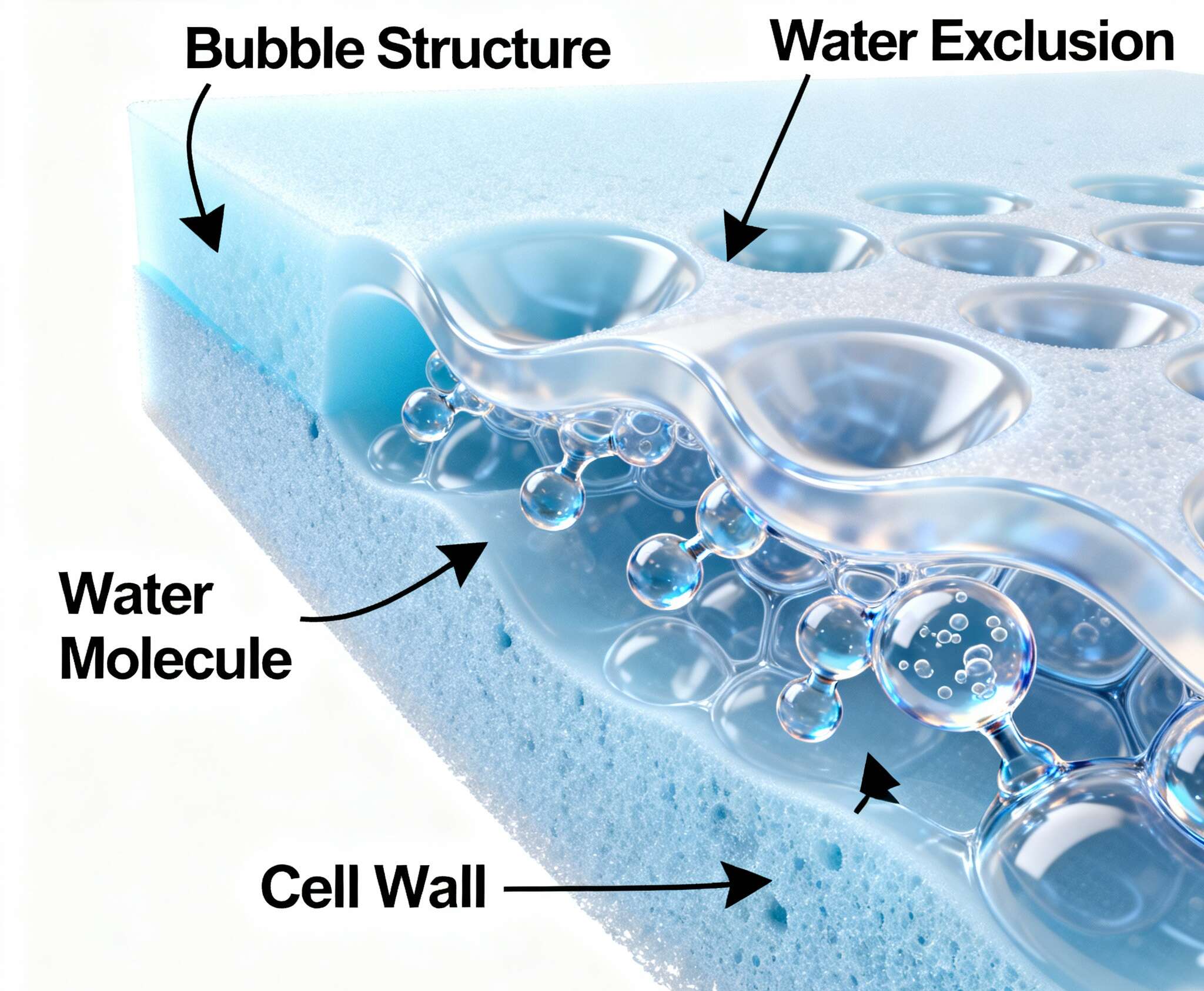
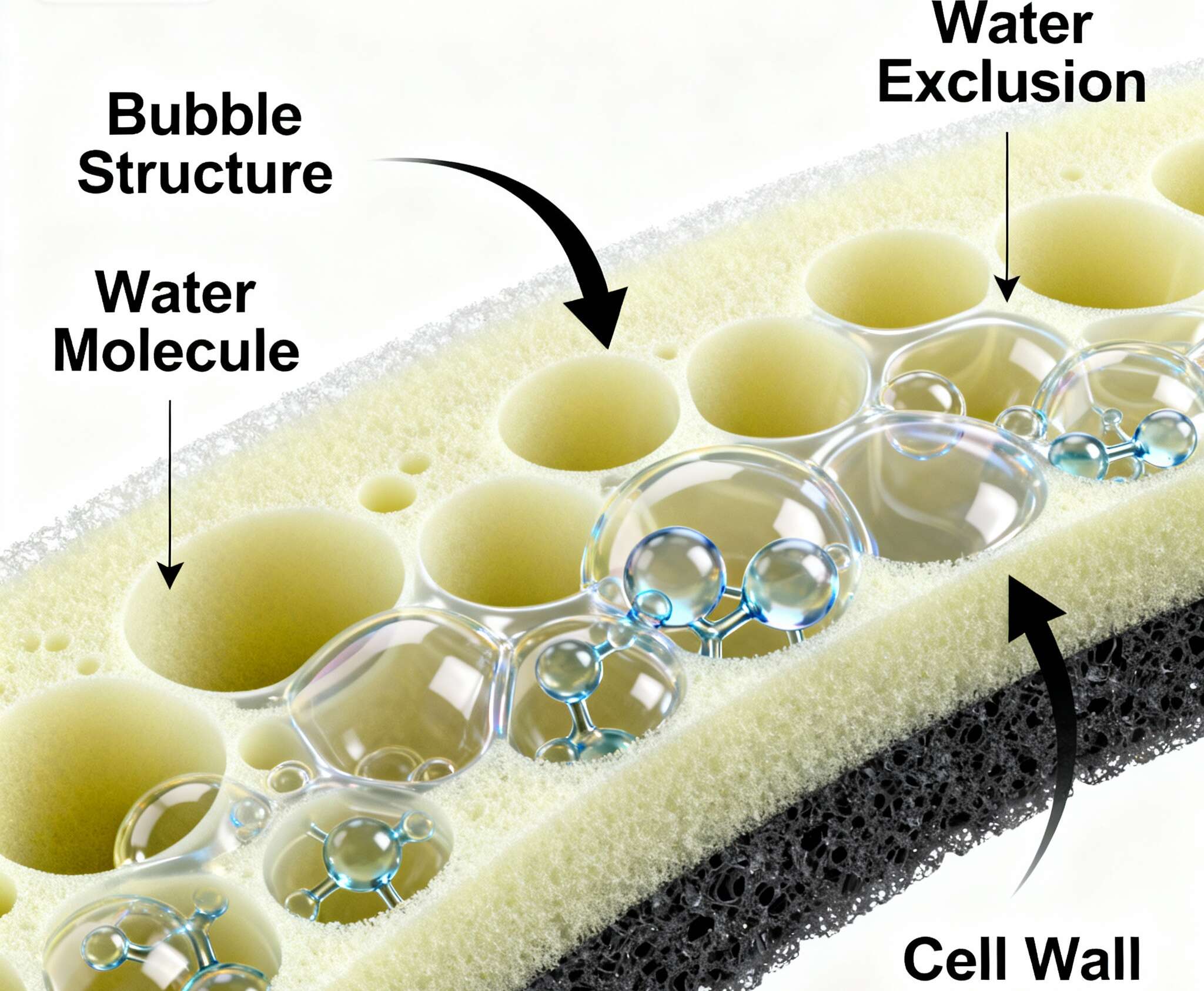
EVA closed-cell foam sheet: water absorption (ASTM D570) & WVTR basics
- Water absorption (24 h, ASTM D570): typically 0.005–0.5% for dense EVA.
- WVTR (water-vapor transmission rate): thin, low-crosslink films sit around tens of g/m²·day; thick closed-cell foam builds push that much lower.
- Translation: splash and short dunk, fine; long humidity + heat = slow vapor creep.
Small grammar warning, I know: numbers sound dry. But you need them to spec parts that don’t swell, stink, or delaminate after a season.
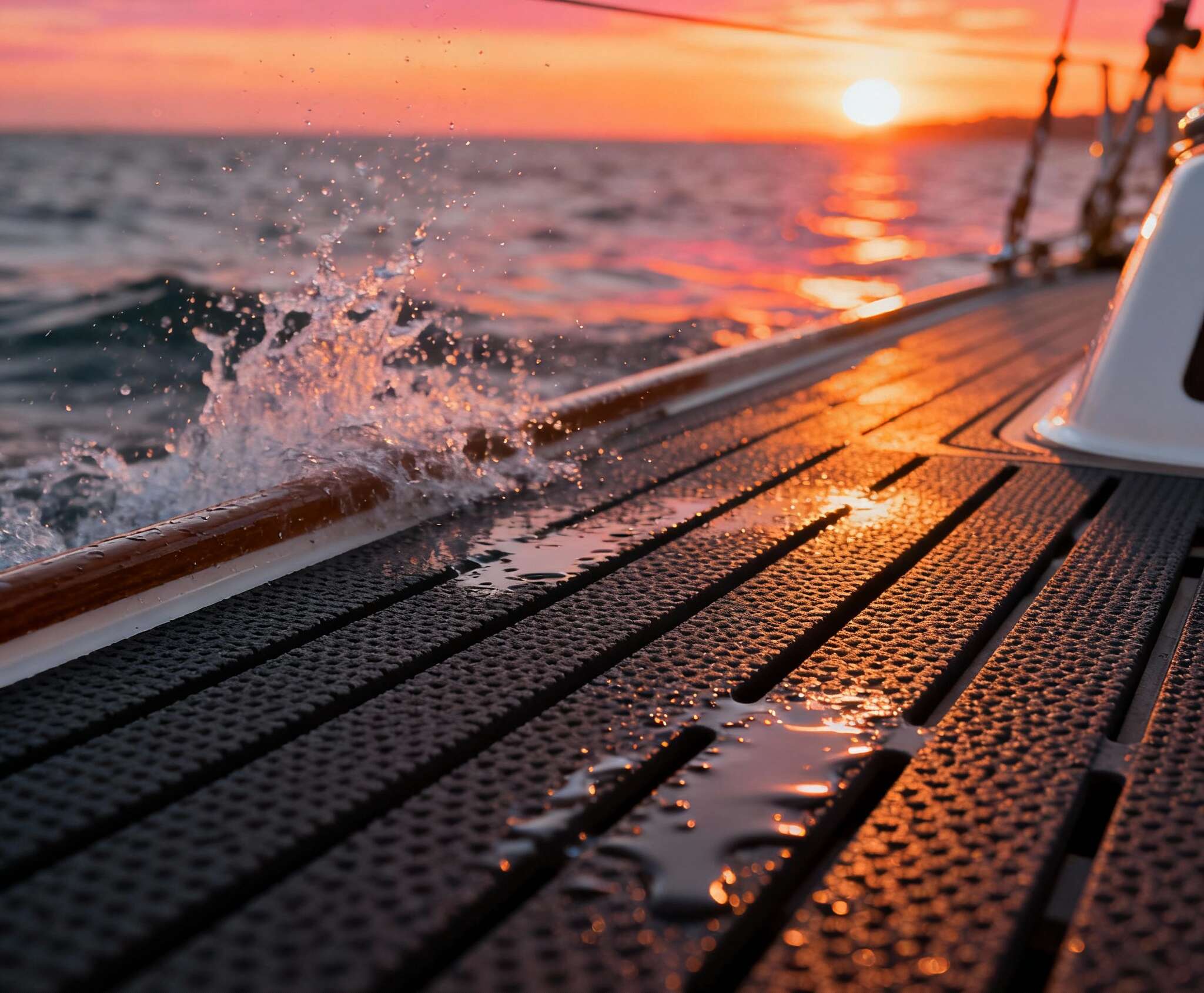
Table — “claim vs data vs where it works”
| Claim (what buyers say) | Data / test idea | Where it works well | Watch-outs in real builds |
|---|---|---|---|
| “EVA is waterproof.” | D570 24 h absorption ≤0.5% (dense sheet/closed-cell) | Marine deck foam, car mats, orthotic top covers, shoe midsoles, cosplay armor | Not a steel tank. Edges, seams, holes let water creep. Seal or tape them. |
| “Closed-cell foam doesn’t soak.” | Closed cells block bulk water; minimal weight gain after soak | Boat flooring, turf padding, play mats, NVH pads | Long hot humidity → WVTR still matters; pick thicker foam or lamination. |
| “It won’t delaminate.” | Proper lamination + 3M PSA + clean surface prep | Car mat backers, insole stacks, cosplay layering | Sweat + soap + heat cycles can lift poor PSA. Ask for primers or flame-treat. |
| “Any EVA works outdoors.” | Crosslinking + UV stabilizers + thickness | Decking sheets, SUP pads, dock bumpers | Cheap blends chalk or compress long-term. Specify Shore C & density. |
Tip: when you request samples, tell the factory your target WVTR, D570 absorption, Shore C, and density. Saves two weeks of back-and-forth.
Real use cases: EVA waterproof performance by scene (and the actual buyer pain points)
Marine deck foam (boat flooring, SUP pads) — closed-cell, sealed edges, salt-spray sanity
You want a deck that doesn’t drink water, drains fast, and keeps grip when wet. Closed-cell EVA shines here. With the right thickness and CNC routing, channels push water away. Big wins come from edge sealing and clean PSA lay-up—that’s where many installs fail, not the foam. If you spec with laminated textured top and mention salt-spray cycles, vendors know you mean business.
- Explore: foam decking sheets, custom boat flooring
Orthotics & footwear — sweat, soap, and all-day compression
In soles and orthotics, water is mostly sweat and wash cycles. Closed-cell EVA top covers resist wet pickup, dry fast, and stay light. What kills builds? Poor bonding to PU midsoles or fabric liners. Ask for surface treatment or primer-compatible PSA. And pick Shore C carefully: too soft, you bottom out; too hard, users complain. Waterproof here = no soggy feel + no stink wicking.
- Explore: orthopedic foam, EVA material shoes
Car mat material & interior NVH — coffee, rain, and steam clean
Car mats see spills, rain, and steam cleaning. Closed-cell EVA doesn’t sponge up liquids, and it’s easy to water-jet or die-cut to shape. Pair EVA with grooved top and anti-skid backing; add heat-resistant PSA if you laminate. Waterproof means no soak-through, fast dry, no funk. Dont forget tolerance control on thickness; mats must sit flat.
- Explore: car mat material
Artificial turf padding & playground — rain cycles + UV + drainage
Under-turf pads want closed-cell structure (no sponging) and perforation strategy for drainage if needed. EVA keeps weight stable after storms. Still, design for vapor: if you trap moisture under films, it creeps somewhere. Use lamination stacks that breathe where needed, or fully seal with proper edges.
- Explore: artificial turf padding
Cosplay / DIY — paint, sweat, con-day chaos
Cosplayers love EVA because it shapes, heat-forms, and shrugs off sweat. Seal edges, prime before paint, and you’re good. Waterproof here means rain won’t ruin your chestplate, but please, don’t shower in it (lol). A closed-cell cosplay foam stays light and comfy.
- Explore: cosplay foam
H2 — EVA closed-cell foam sheet vs roll: which is more “waterproof” in practice?
- Sheets give you stable thickness and easier CNC routing for channels and logos. Great for boat deck kits and car mats.
- Rolls simplify continuous lamination and long mats; fewer seams = fewer leak paths.
- Both are closed-cell options at Sansd. If you need Pantone color, tread texture, 3M PSA, or logo-inlay, call it at RFQ—water resistance is as much about process as material.
H2 — EVA water absorption & WVTR: quick numbers you can use
Below is a compact spec crib to drop into your RFQ or QC sheet. Keep it simple, adjust by use case.
| Metric | Typical EVA closed-cell target | Why it matters |
|---|---|---|
| 24 h water absorption (ASTM D570) | ≤0.5% (dense/closed-cell) | Indicates low water uptake, no soggy feel |
| WVTR (23–38 °C) | low tens g/m²·day for thin films; lower with thicker closed-cell stacks | Controls humidity creep over time |
| Shore C hardness | 25–60 by scene | Softer for comfort (orthotics), harder for deck |
| Density | custom (e.g., 60–200+ kg/m³) | Weight, cushioning, cut quality |
| Crosslinking | required for outdoor | Shape hold, creep resistance |
| Surface | Emboss / brush / diamond | Wet traction, brand look |
| Backing | 3M PSA / fabric / rubber | Bonding to hulls, floors, midsoles |
Note: numbers are guidance, not holy law. Real life means tolerances, climates, and users who forget care instructions.
Waterproof isn’t just material: seams, edges, and lamination are king
EVA water-resistant, but edges leak
Closed cells block bulk water, but edges, screw holes, and seams are classic fail points. For deck kits, ask for edge-chamfer + sealant. For mats, spec wrapped edges or overlapped joints. For insoles, align grain/flow before trimming so seams sit out of sweat paths.
Pick the right adhesive system
3M PSA on clean, dry surfaces works great; for tough substrates (gelcoat, textured plastics), request primer or flame treatment. Heat + soap + salt = harsh life. You want the right adhesive thickness and liner type for on-site install.
Thickness buys time
Thicker closed-cell stacks slow vapor and increase comfort. If your environment is hot & wet (tropics, engine bays), add thickness or barrier lam. Waterproof is a system property, not a single polymer buzzword.
Why Sansd (Largest Custom EVA Foam Manufacturer in China | Sansd)
You’re here for factory-direct control. Sansd runs EVA/PE closed-cell foam in sheets & rolls with Pantone color, Shore C hardness, 3M PSA, textured surfaces, and laminated stacks. We handle CNC routing, die-cutting, skiving, and logo inlay. MOQ? Talk to us. Lead time? We schedule clear. We ship COA, and materials comply RoHS/REACH. If you need boat deck foam, orthotics, car mats, cosplay, or turf padding, you get repeatable parts, not “maybe-good” parts.
- Start here: Sansd — EVA Foam & Marine Deck
Buyer checklist (paste into your RFQ)
- Scene & pain points: “marine deck, salt, barefoot, jet-wash, want non-slip and no water soak.”
- Material spec: EVA closed-cell, density & Shore C, thickness, color (Pantone).
- Surface: emboss/diamond/brush; logo routing yes/no.
- Backing: 3M PSA, liner type, primer request.
- Targets: D570 24 h ≤0.5%, WVTR low, UV stabilizers.
- Converting: CNC, bevel edges, sealant type, kit layout.
- Docs: COA, RoHS/REACH, packing method, pallet plan.
If you tell the factory these up front, you wont get that awkward “oh we didn’t know” later.
Conclusion: “waterproof” with EVA is design, not just polymer
EVA itself is water-resistant and low-absorption. In closed-cell form, it’s perfect for decks, mats, insoles, cosplay, and padding. But true waterproof performance comes from the whole stack—foam + thickness + lamination + edges. Get those right, and your parts stay light, clean, and drama-free through rain, sweat, and spray.
When you’re ready, ping Sansd with your scene, spec, and drawings. We’ll tune density, Shore C, thickness, color, texture, and PSA so the build fits real life, not just a datasheet.