

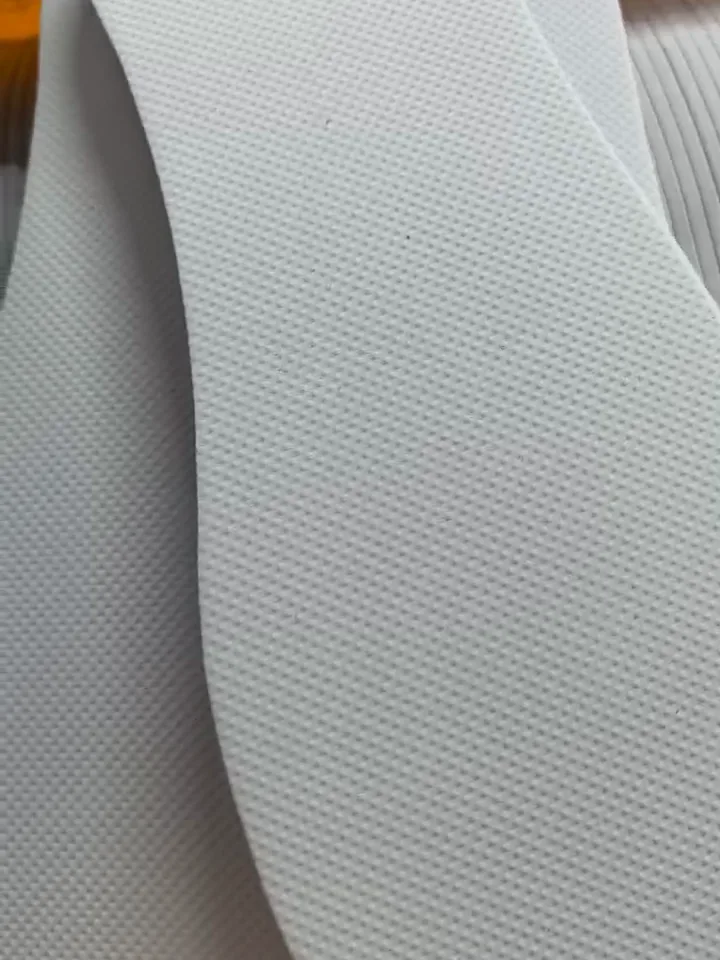
Disposable slippers for guests are made of two main parts: a soft fabric upper and a thin EVA foam sole. The sole does most of the work. It keeps the guest off a cold, wet bathroom floor, and it decides whether the slipper feels cheap or decent. This guide looks at the sole from the factory side: what it is made of, how thick it should be, which tread grips best, and what to check before you order hotel slippers in bulk.
What are disposable slippers for guests made of?
Take a hotel slipper apart and you will usually find three things. On top there is a fabric upper. Underneath there is a foam sole. A plastic or paper bag keeps the pair clean until the guest opens it.
The upper is where hotels show their style. You see non-woven fabric in budget rooms, and terry, waffle cotton or velour in better ones. The sole is far less varied. Almost every hotel slipper sole we cut is EVA foam. EVA (ethylene-vinyl acetate) is a soft, flexible plastic that behaves a lot like rubber, as the Wikipedia entry on ethylene-vinyl acetate explains. When it is foamed, it gets very light and does not soak up water. That is exactly what a slipper that lives in a bathroom needs.
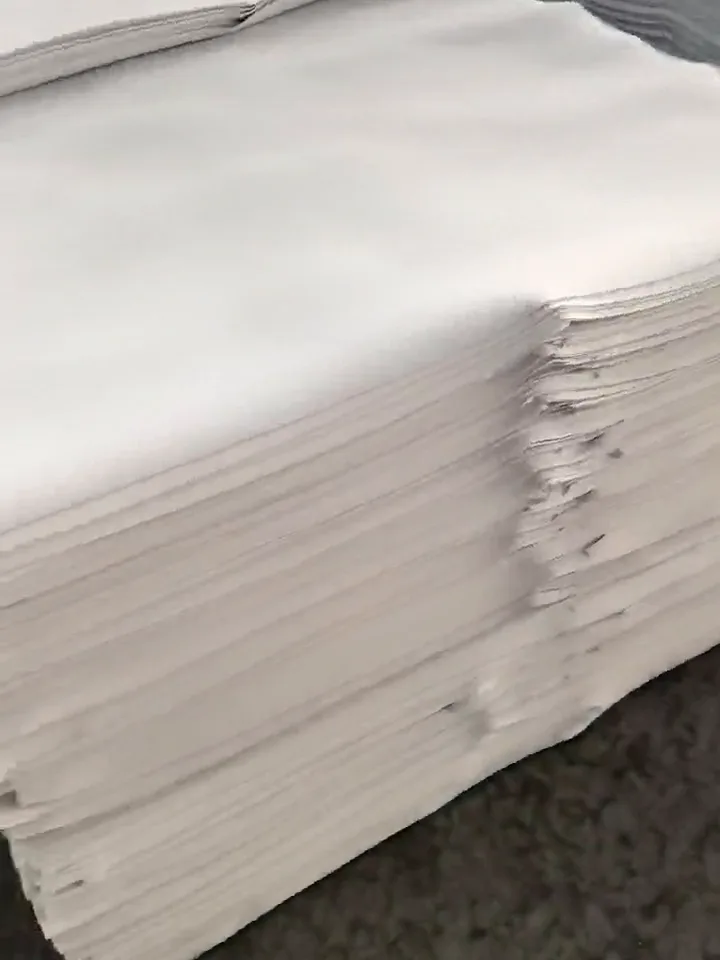
We supply the sole side of this: EVA hotel slipper soles, either as full sheets or as die-cut soles. Slipper factories and hotel amenity suppliers sew or glue them to their own uppers.
Why hotel slipper soles are EVA, not paper or rubber
Buyers sometimes ask me if there is a cheaper option than EVA. There are thinner cardboard-style insoles and heavier rubber soles on the market. For a slipper that is worn once and then thrown away, neither makes much sense.
| Sole material | Weight | On a wet floor | Typical use |
|---|---|---|---|
| EVA foam | Very light | Does not absorb water; grip depends on the tread | Standard for hotel and spa slippers |
| Paper or cardboard | Light | Goes soft when wet | Very low-cost, dry-room use only |
| Rubber or TPR | Heavy | Good grip, but costs more and adds shipping weight | Reusable slippers, not throw-away ones |
Source: SANSD factory experience with hotel slipper buyers, 2026.
So the real decisions are not about the material. They are about the EVA itself: how thick, how hard, what colour, and what pattern on the bottom.
How thick should a hotel slipper sole be?
Most hotel slipper soles are 3 to 5 mm thick. We can cut anything from 1 mm to 9 mm, but 3 to 5 mm is where nearly all hotel orders land.
Please don’t go under 2 mm. Below that, the sole breaks easily. A guest steps out of the shower, the heel bends, and the foam cracks across the arch. It saves very little per pair, and it is the slipper people remember for the wrong reason.
Hardness matters as much as thickness. We measure it in Shore C, a durometer scale used for soft foam. Our two standard grades are:
- 40–45 Shore C: soft and cushioned. It folds flat in the box, which suits one-night disposable slippers.
- 70 Shore C: firm. It keeps its shape over several days and the cut edge stays clean. Spas and longer-stay hotels tend to choose this one.
The standard colour is white. If you need grey, navy or a colour that matches your upper, we match it on the sheet before cutting. The full spec list is on our hotel slipper sole manufacturer page.
Which tread pattern stops slipping on wet floors?
Most of our hotel buyers choose a wave pattern. A smaller group prefers a diamond grid. Both are pressed into the EVA sheet before the soles are cut, and both work on a wet tiled floor.
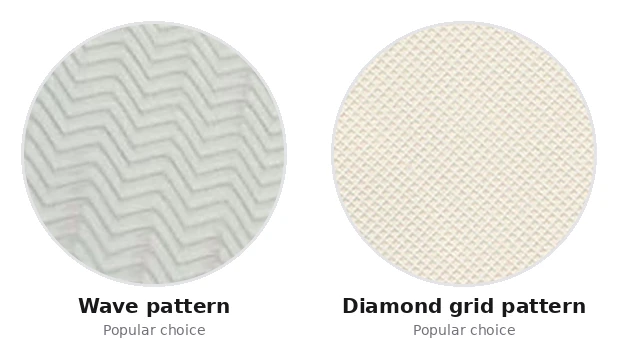
| Tread pattern | What it looks like | How it grips | Who chooses it |
|---|---|---|---|
| Wave pattern | Zigzag ridges across the sole | The ridges push water aside on tiled floors | Most hotel buyers; the usual default |
| Diamond grid pattern | Small raised squares, a bit like a waffle | The raised points grip in every direction | Buyers who want a more finished look |
Source: SANSD factory experience with hotel slipper buyers, 2026.
In the end it is mostly a matter of taste, and of what your current slipper already uses. If you are replacing a supplier, send us the sole you buy now and we will match the pattern.
Can you add a hotel logo to the slippers?
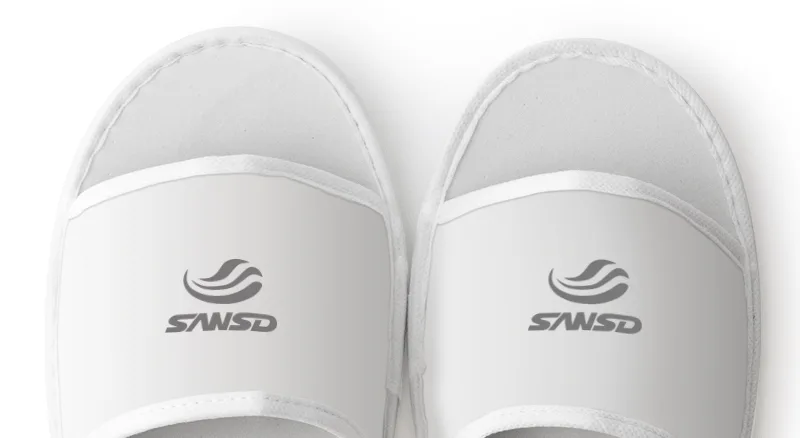
Yes. Screen printing is by far the most common method we see. It is cheap per pair, works on fabric and foam, and a one-colour logo looks clean. Most hotels print on the upper so guests see it. If you also want the logo on the sole, we can do that and send a sample for approval before the run.
Are recycled EVA soles a good idea?
They are possible, and SANSD holds GRS (Global Recycled Standard) certification. But I don’t usually recommend recycled EVA for hotel slippers. The colour is the issue. Recycled foam is never quite as white as virgin EVA, and next to a bright white upper it can look grey or slightly dirty.
If budget is the main concern and the slipper is a darker colour anyway, recycled EVA is worth a sample. For the classic all-white hotel slipper, virgin EVA still looks better in the room.
Buying hotel slippers in bulk: what to send the factory
The fastest way to start a bulk order is to send us the paper pattern of your sole. With the pattern we can make the cutting die right away. If you don’t have one, the next best thing is to post us a sample slipper. Experienced buyers nearly always have a sample on hand, so this step is quick.
Before you confirm a wholesale order, check these points with your supplier:
- Size. A typical adult one-size hotel sole is about 29 cm long, 11 cm wide at the forefoot and 8 cm at the heel.
- Thickness and hardness. Say the number in millimetres and in Shore C, not just “soft” or “thick”.
- Tread. Wave or diamond grid, and on which face.
- Sheet or cut soles. Our sheets come in 1.2 m x 2.4 m or a large 1.4 m x 3.6 m. Die-cut soles come packed in separate left and right bags, counted and tagged.
- Sample approval. Approve a physical sample before mass production. Our samples are free.
Lead time for hotel slipper soles is about 25 days after sample approval. We ship FOB Xiamen, and CIF or DDP can be arranged. The minimum order is confirmed with the quotation, and we reply to quote requests within one business hour.
Frequently asked questions
What is the sole of a hotel slipper made of?
The sole of a hotel slipper is almost always EVA foam. It is light, soft and does not absorb water. Most soles are 3 to 5 mm thick with a wave or diamond grid tread.
Are disposable hotel slippers waterproof?
The EVA sole is water-resistant because it is a closed-cell foam that does not soak up water. The fabric upper is not waterproof. Guests can step on a wet bathroom floor without the sole going soft.
Why do some cheap hotel slippers break so easily?
Cheap hotel slippers usually break because the sole is too thin. EVA soles under 2 mm crack easily when the foot bends. A 3 mm sole costs only a little more and lasts through a normal stay.
What size are disposable slippers for guests?
Most disposable slippers for guests come in one adult size. A typical sole is about 29 cm long, 11 cm wide at the forefoot and 8 cm at the heel.
How are logos added to hotel slippers?
Most hotels add their logo to slippers by screen printing. The logo is usually printed on the upper, and it can also go on the sole. Ask for a printed sample before the full order.
Which non-slip pattern is best for hotel slipper soles?
Wave and diamond grid patterns both work on wet bathroom floors. The wave pattern is the most common choice among our hotel buyers. The diamond grid suits buyers who want a more finished look.
Where can I buy hotel slipper soles in bulk?
You can buy hotel slipper soles in bulk from an EVA foam manufacturer, as sheets or die-cut soles. Send the factory your paper pattern or a sample slipper, and agree on thickness, Shore C hardness and tread before production.
Choosing the sole for your next order
If you only remember one thing, make it this: choose 3 to 5 mm white EVA, never under 2 mm, with a wave or diamond grid tread. Then pick 40–45 Shore C for one-night slippers or 70 Shore C for spa use. Send your paper pattern or a sample, and we will cut a free test sole to match. Sizes, hardness options and packing details are on our hotel slipper sole page. Making home slippers instead? See our EVA soles for home slippers.